Research Report
Research Conducted by: Luisella Celi, PhD, University of Torino, Italy
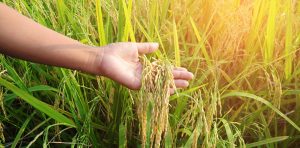 Rice (Oryza sativa) is the staple food for more than half the world’s population, feeding about 3.5 billion people. Compared with other crops, however, rice accumulates higher amounts of arsenic (As) due to its cultivation in flooded fields under anaerobic conditions. Arsenic is a toxic and carcinogenic element.
Decreasing As levels in the rice grain, particularly the more toxic inorganic forms (As [III] and As [V]) is, therefore, one of the main objectives of rice producers and policymakers. The European Commission has recently set a limit of As content in commercial rice to 200 µg kg-1 for white rice and to 100 µg kg-1 for baby food rice. Hence, it is essential to establish appropriate agronomic practices for reducing As accumulation in rice.
A promising practice is the application of silicon (Si) sources, since Si competes with As uptake at the root level. There are only a few efficient silicon sources in the market that limit As uptake by plants. Therefore, it is necessary to identify efficient fertilizers that are safe for the environment and food quality.
In this study, Huma Gro® Sili-Max® demonstrated its ability to supply rice plants with available Si while decreasing inorganic As content in the grain more significantly than the other tested Si sources. Sili-Max® proved to be a promising Si source not only for supplying Si but also for limiting plant uptake of inorganic As, one of the most toxic elements in rice products.
Read the Report Online Download the Report PDF
Listen to a 3-minute presentation on the study by Dr. Abi-Ghanem:
To learn more about purchasing Huma Gro® products, please click here.