We are excited to introduce our new educational project, the Humic Conversations Video Series. As the name suggests, each episode of the series will focus on humic substances. Two leading researchers from our Humic Research Lab. Dr. Rich Lamar and Dr. Hiarhi Monda will share their expertise with the viewers.
In Episode 1 of this series, we discuss the basic science of humic substances. Dr. Lamar and Dr. Monda explain what humic and fulvic acids are, how they are formed, where they come from, and what their biostimulant properties are when it comes to plant and microbial growth.
The 16-minuite video is closed captioned in English and Spanish.
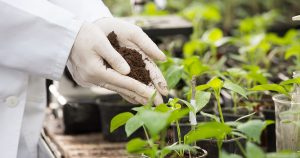 In a research study, originally published in Frontiers in Plant Science, May 2021, Vol. 12:660224, the biostimulant properties of humic acid (HA) were tested on Micro Tom tomato plants under increasing nutritional stress. The results confirmed the positive role humic acids play in enhancing nutrient efficiency uptake in plants.
 A recent field trial on green chile peppers has concluded that Promax® and Zap® treatment is noticeably effective in lowering the parasitic nematode population while improving the beneficial microbe population. This positive effect on the soil biology boosted the yield of green chile peppers and resulted in an increased profit for the farmer.
 We are accustomed to seeing humic substances (humic and fulvic) in dry/granular form, and we tend to think of acids as liquids. So why are humic and fulvic substances called acids?
 To help increase awareness about sustainable agriculture production, Bio Huma Netics, Inc., (BHN) is sponsoring a FarmProgress course for Certified Crop Advisers (CCAs) and Pest Control Advisers (PCAs) in the United States and Canada.